.avif)
On April 30th, the Department of Energy's Idaho Operations Office (DOE-ID) has approved the Documented Safety Analysis (DSA) for the Aalo-X Critical Test Reactor, advancing Aalo into its final pre-operations phase, the Operational Readiness Review.
The DSA is the authoritative safety basis for a DOE nuclear facility. It demonstrates in detail that a facility can be operated safely across its full range of normal, off-normal, and accident conditions. It is one of the most rigorous regulatory gates in the DOE process. For a commercial reactor, the closest analog would be the Final Safety Analysis Report (FSAR) issued by the Nuclear Regulatory Commission (NRC).
What is the Critical Test Reactor?
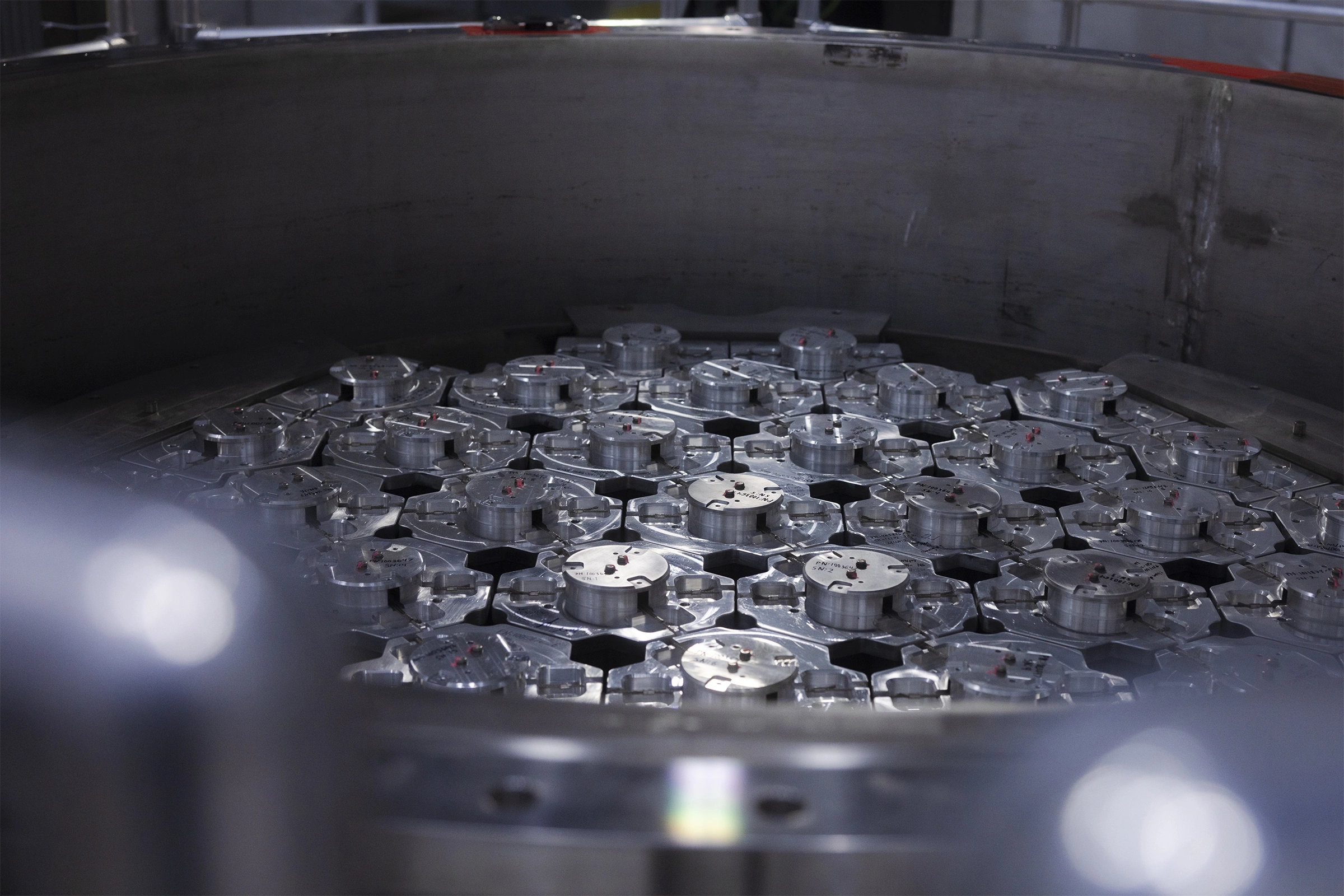
In the Aalo-X Critical Test Reactor, Aalo will test its full-scale nuclear core, with fuel equivalent to what’s necessary for 10 MWe, before adding sodium coolant to the equation.
The goal is to achieve criticality, a self-sustaining nuclear reaction, at low power and with reduced heat generation. The Critical Test Reactor contains nuclear fuel, moderator, control rod drive mechanisms, shielding, and instrumentation systems that are direct analogs of what will operate in the 10 MWe Aalo-X power reactor being built next door. Operating the CTR will validate our neutronics and offer key test data that verifies our computational models.
To achieve this goal, we stood up an entirely new facility, exercised our supply chain, expanded internal manufacturing capabilities, and collaborated with the institutions needed to reach compliance with federal regulations. These accomplishments establish Aalo as a credible nuclear facility designer and operator.

Serving Customers Means Licensing Nuclear Facilities
AI data centers require power all over the country, and in general our customers’ sites will have no onsite DOE presence. So to serve these customers, we must be able to do more than just license reactor technology, we also need to build and independently operate nuclear facilities. That is exactly what we are doing at the CTR.
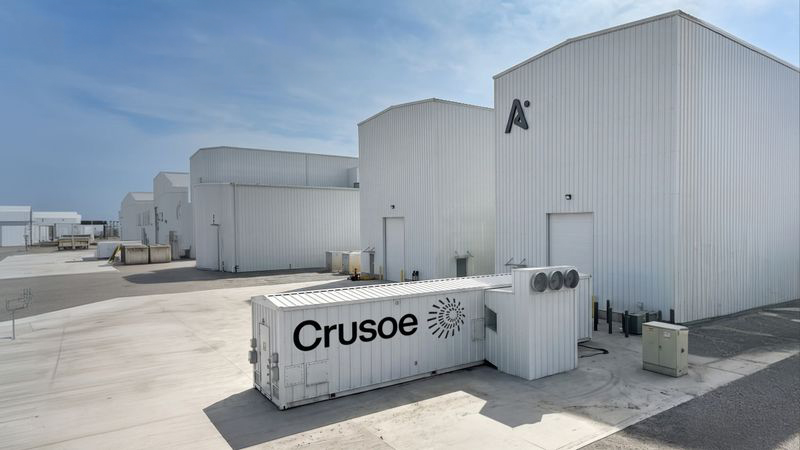
The Critical Test Reactor Building, formerly called the Critical Assembly Facility (CAF), is located at Idaho National Laboratory on land leased from DOE. Its construction, management, and operation will be performed almost exclusively by Aalo and its subcontractors, a fact that makes Aalo stand out within the Reactor Pilot Program. Today’s DSA approval reflects the extent of the safety basis and operational programs Aalo developed and executed to design a safe reactor within regulatory requirements.
(Because the Aalo-X Critical Test Reactor is an experimental facility located on DOE land, it is being authorized under the DOE framework rather than the NRC. The regulatory rigor is nevertheless comparable.)
Our team’s experience with the Documented Safety Analysis brought to light many facets of compliance that we’ll carry forward to the commercial licensing process when building Aalo Pods for AI data centers. We radically improved our internal competencies on nuclear licensing, and as such we laid the foundation for regulatory success during commercial scaleup.
Becoming a Nuclear Organization
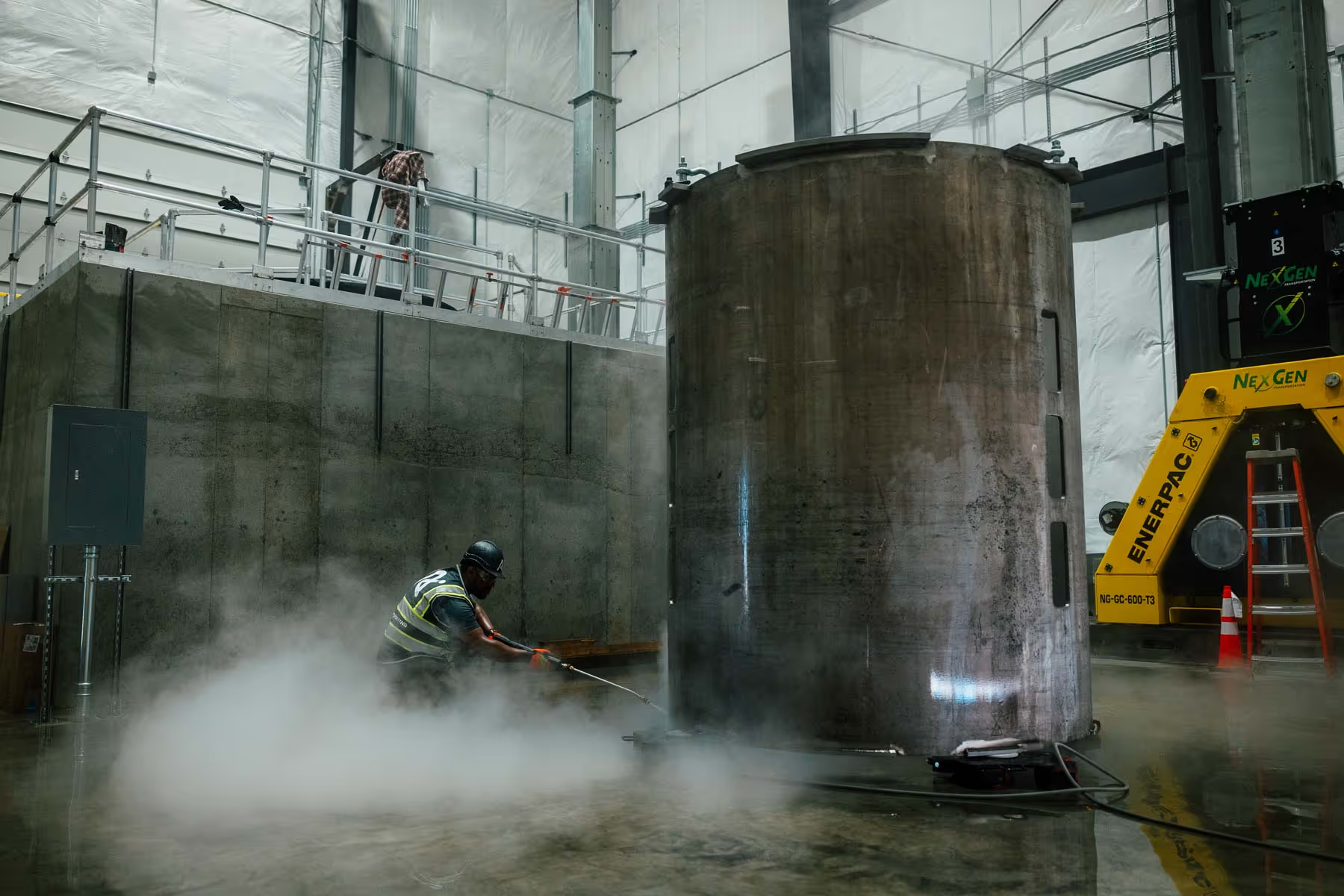
The reactor safety analysis is what many people think of when they imagine licensing a new reactor. But that work represents only half of approved documentation.
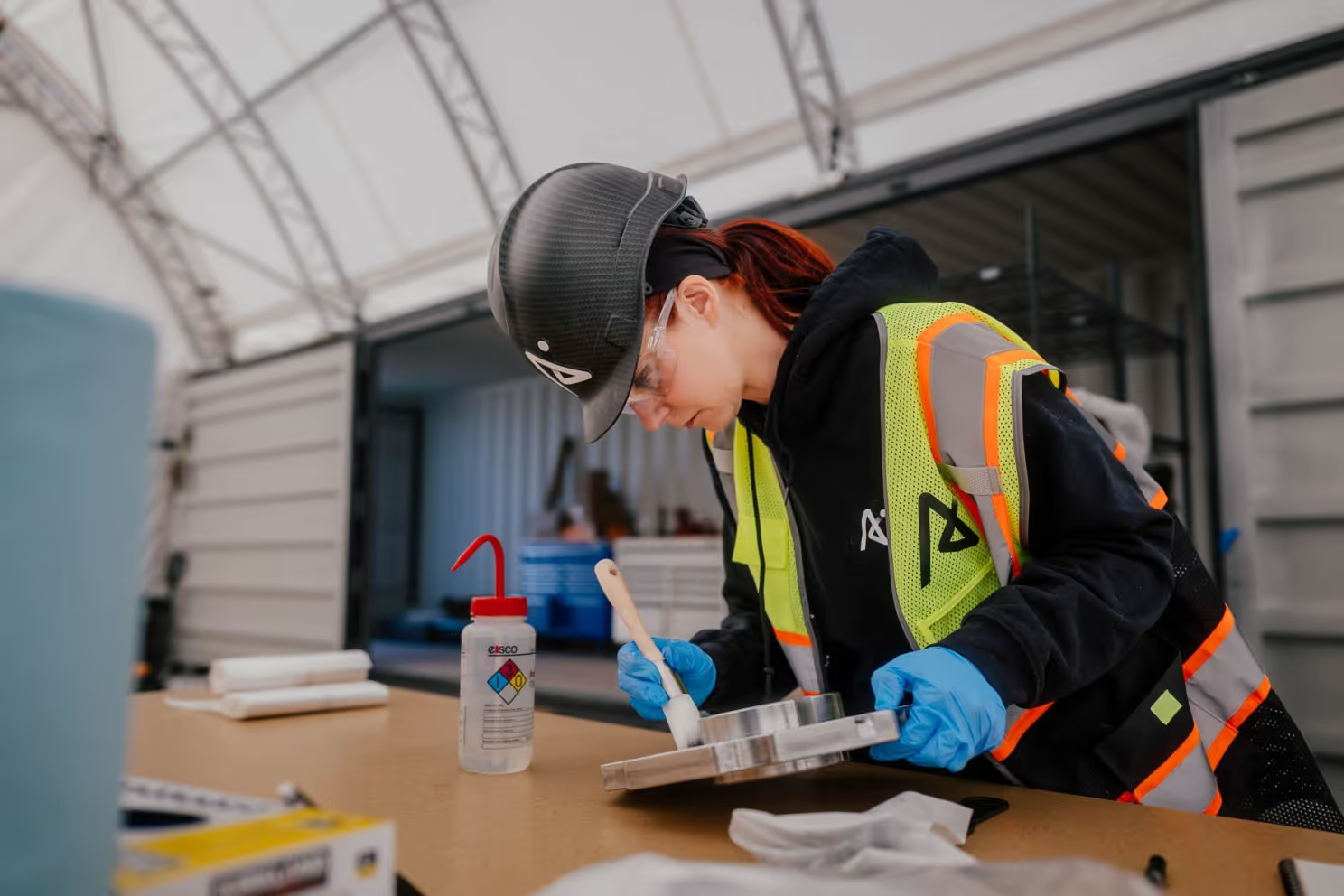
The other half is something that receives less external attention but is equally consequential: the Safety Management Programs, or SMPs. SMPs are the institutional systems that enable Aalo to run a nuclear facility. They span the full set of disciplines, including: quality assurance, radiation protection, criticality safety, conduct of operations, training and qualification, maintenance, configuration management, emergency management, fire protection, and worker safety and health.
Standing up SMPs from a blank slate and then demonstrating to the regulator’s satisfaction that each one functions as designed is a substantial undertaking. It is the unglamorous work that transforms a company with a reactor design into an organization that can run nuclear reactors.
Next Steps
A regulatory milestone at this level is the output of many people doing difficult, detailed work over a long period. We want to thank DOE leadership and the review staff who executed the DOE-STD-1271 framework, along with the modernized NE orders. We also want to give a huge thank you to the team at Aalo who carried out this work, along with our partners and advisors.
For nuclear regulators worldwide, including those shaping the commercial frameworks that will govern the next generation of reactors, DOE-STD-1271 and the approach taken here merit serious study.
The final phase before criticality is the DOE-led Readiness Review, in which DOE verifies that the people, facility, and programs can be cleared to operate as documented.
Today’s DSA milestone proves our team’s execution discipline, and we are looking forward to next steps. Onwards to criticality.