By Independence Day, 2026, on the 250th anniversary of the United States, our nuclear engineers will bring Aalo-X, a next-generation advanced reactor, to criticality, proving what many thought impossible under the ambitious timeline of Executive Order 14301. Soon after, we will go to full power. At Aalo, we want to bring the public along as we welcome back peaceful atomic energy to the mainstream of America. So, we're sharing our ambitious plans for the next 12 months.
Aalo-X: A Full-Scale 30 MWth XMR
Aalo-X is a full-scale advanced eXtra Modular Reactor, targeted to be built by end of 2026. It operates at 30MWt (megawatts thermal) and is designed to produce 10 MWe (megawatts electrical) of electricity via a steam generator and turbine. Aalo-X is a real advanced nuclear power plant: it contains a sodium-to-steam heat exchanger feeding a 10 MWe turbine-generator, air-cooled condensers, and all auxiliary and safety systems. This makes it a true unit cell of Aalo’s commercial “Pod” reactor product, which can be scaled anywhere from a single 10 MWe module to a 200 MWe multi-unit power station, with 50 MWe being the standard offering. In other words, what we prove with Aalo-X at 10 MWe can be multiplied many times over, a plug-and-play reactor building block for future deployments.
To go into technical specifics, Aalo-X uses low-enriched uranium dioxide (≤5% U-235) with a graphite moderator in the core, achieving a thermal neutron spectrum with liquid sodium. The primary reactor vessel is a hybrid loop-pool-type configuration, housing the core, control rods, pumps, and heat exchangers in one sealed tank that offers the ideal configuration for passive safety. Surrounding that is a secondary sodium loop that transfers heat to the steam generator, keeping water and the radioactive sodium in the reactor distinctly separate. By integrating proven features like double-walled sodium-steam generator tubes inspired by EBR-II with novel modular fabrication techniques, Aalo-X will show that nuclear innovation can mesh with proven engineering.
Pushing to TRL 9: Full Power, Burnup, and Refueling
We understand that it can be confounding for outsiders to evaluate the seriousness of various reactor demonstrations and projects (especially now, in the age of the internet, deep fakes, and the rest.) Fortunately, NASA established a tool called Technology Readiness Level (TRL) for just this purpose. It is a scoring scale from 1 to 9 that uses hard metrics to grade a technology’s readiness. 1 is a truly conceptual design; 9 is a top-to-bottom proven system.
Aalo-X is designed to reach TRL 9: meaning it’s a full demonstration of the system in an operational environment. For Aalo, that entails proving Aalo-X at full power over an extended period, burning fuel, proving our safety systems work, and demonstrating refueling. After first criticality in early-2027, we will gradually raise power in steps to the full 30 MWth rating, gathering data and confidence at each plateau. Ultimately, Aalo-X will run at 100% power for sustained periods (including a 100-hour endurance run) and generate electricity, just as a commercial unit would. This rigorous “shake-down cruise” will validate that the reactor can produce stable, full-power operation and safely handle transients (like rapid load changes or pump trips).
Running the reactor for many months will accumulate significant fuel burnup, allowing us to observe fuel performance under real conditions, data that’s critical for demonstrating reliability. Although the Aalo-X test is planned as a single-core campaign (~1-3 years of continuous operation without refueling), we intend to exercise the refueling process as part of the program. This may involve fuel unloading and reloading operations after the core’s initial run, testing our fuel handling systems and procedures, and making adjustments that can improve capacity factors of commercial deployments. By the end of the test campaign (expected end of 2027), Aalo-X will have generated an exhaustive dataset on neutronics, thermal performance, fuel behavior, and operations and maintenance activities. In short, we’re looking inside every crack and crevice, so that when Aalo-X completes its mission, no one can say this reactor isn’t ready for the real world.
Achieving TRL 9 on a first-of-a-kind reactor is a rare feat. It means that by the time we finish, Aalo-X will have graduated from an experiment to a fully proven system. This will be more than a milestone. It will represent scaling an engineering mountain--and it will validate the seriousness of the XMR product we plan to bring to market.
The ability to go from factory fabrication to grid-connected operation, to refueling, all within a tight timeline, is a forceful demonstration that sets Aalo on the course to a vast commercial scaleup.
Embracing an Iterative Learning Culture
How is Aalo making such rapid progress on a timeline that would make most nuclear engineers sweat bullets? The answer comes from the iterative learning culture, an organizational mindset more commonly found in Silicon Valley or at SpaceX than in the nuclear industry. We believe in designing fast, frequently prototyping, and learning quickly from iterative hardware testing and data. (Our engineers are sweating a lot, too.) That ethos has driven every aspect of Aalo’s reactor development program so far; it’s present both in manufacturing and design engineering.
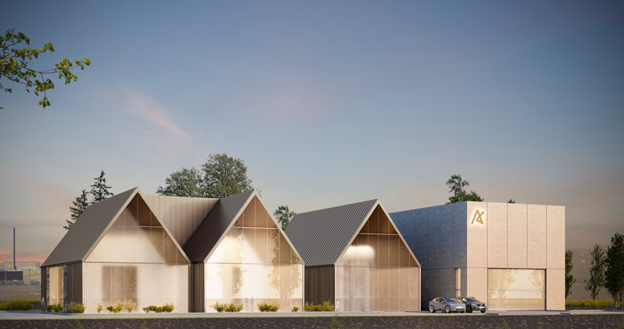
Take our factory approach: earlier last year, we launched our first manufacturing and assembly facility in Austin, TX. Rather than wait for final designs, our team ran a rapid test: fabricating and assembling a full-scale non-nuclear prototype of Aalo-X’s primary system, learning in the process how to formalize Design for Manufacturability and Assembly (DFMA) on this class of equipment.
Non-Nuclear Test Units
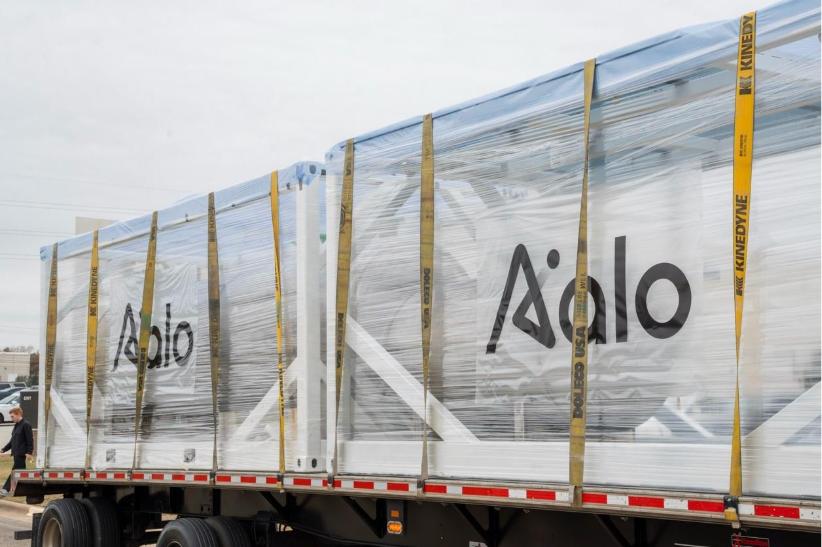
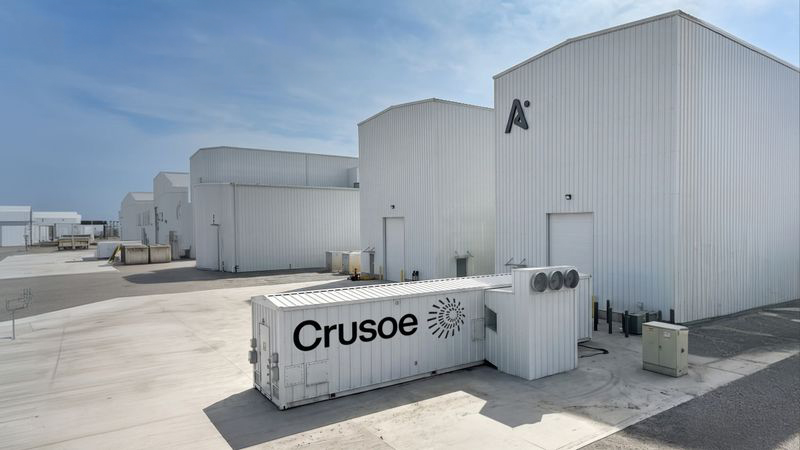
In Austin, we built a skid-mounted sodium test loop. Now it’s in Idaho. Our technicians packed it up, modularized it, tarped it and trucked it 1,452 miles on the open road. This is, after all, what it means to build modules in a factory and deploy at site.
The sodium test loop brings us one step closer to the power reactor. It allows us to qualify key components like heat exchangers, plugging meters, cold traps, the heat trace system, and more at operating temp and flow conditions. After extensive Instrumentational & Controls (I&C) implementation, the test loop has been commissioned, and we’re actively running tests to gather key operational data and experience on primary and secondary systems.
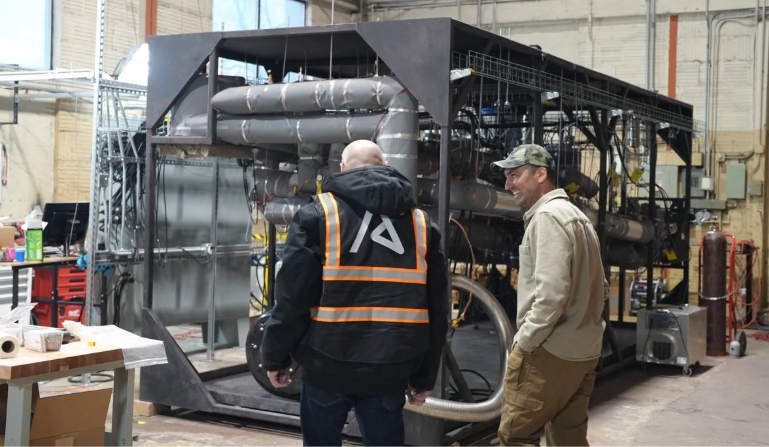
The STL is important, but we also need full-scale testing. That is why we are now building and assembling a plant-scale non-nuclear test unit called Aalo-0 that can simulate integral effects with 60,000 lbs of flowing sodium at operating conditions. Construction is well underway; several modules have been completed and shipped for weld qualifications. For Aalo-0, we are targeting Summer 2026 to finalize construction and Fall 2026 to load sodium and commence testing.
.png)
Our non-nuclear prototypes talk to us. They give us invaluable feedback, design tweaks, improved operating procedures, and gradually, they reduce uncertainty—all without us needing to put a fuel rod in. In engineering terms, we are de-risking the thermal-hydraulic and mechanical aspects of Aalo-X through rapid prototyping and testing, embodying our mantra: build, test, learn, repeat.
On July 4, we are applying that same iterative philosophy to the neutronics and reactor physics realm. Rather than relying on simulations or a one-shot startup test at Aalo-X, Aalo has invested in stepwise learning on the nuclear side as well. This brings us to one of the most exciting elements of our program: the zero-power reactor we’re building for physics testing.
Learning at Low Power: The Critical Test Reactor (CTR)
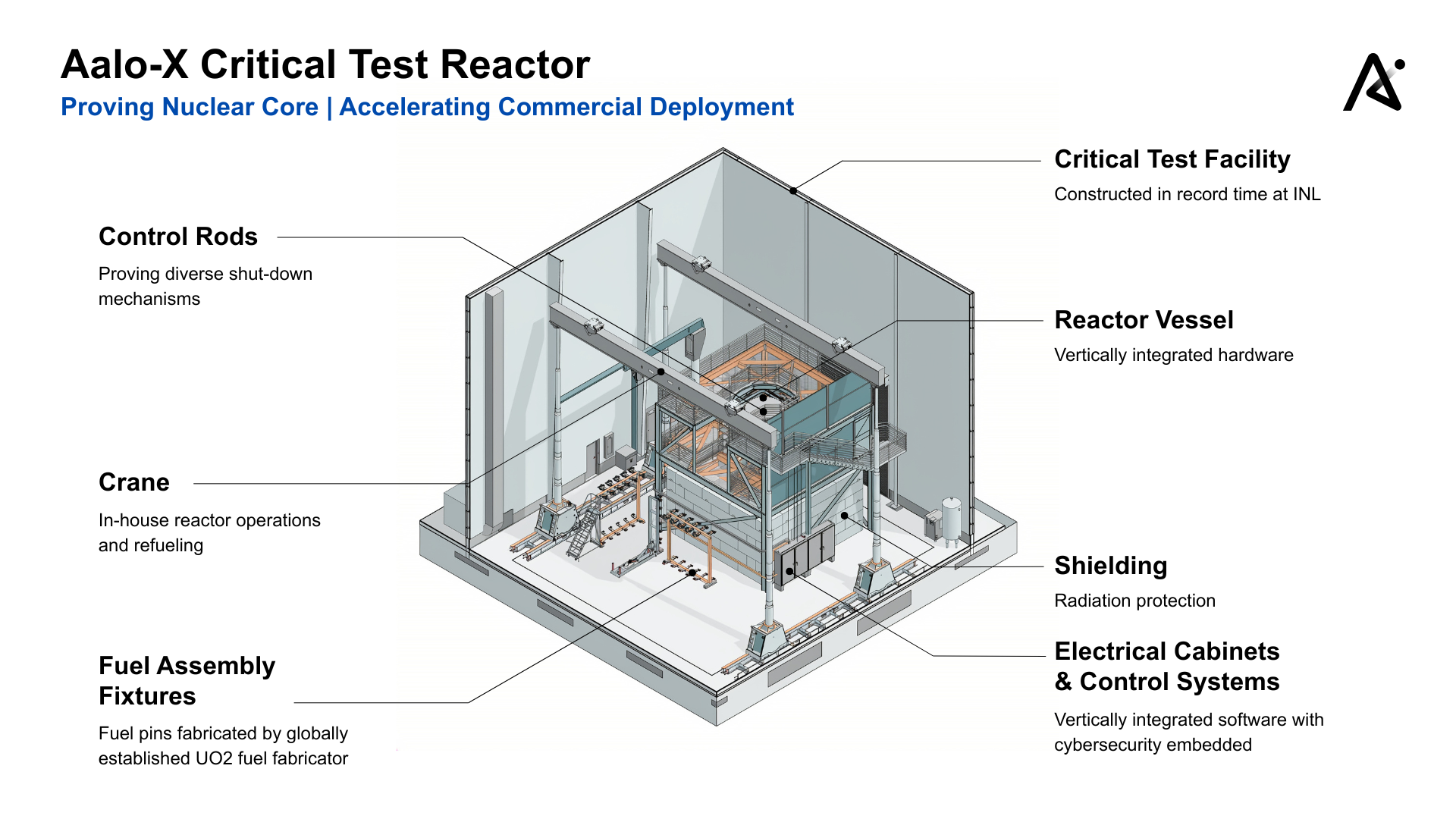
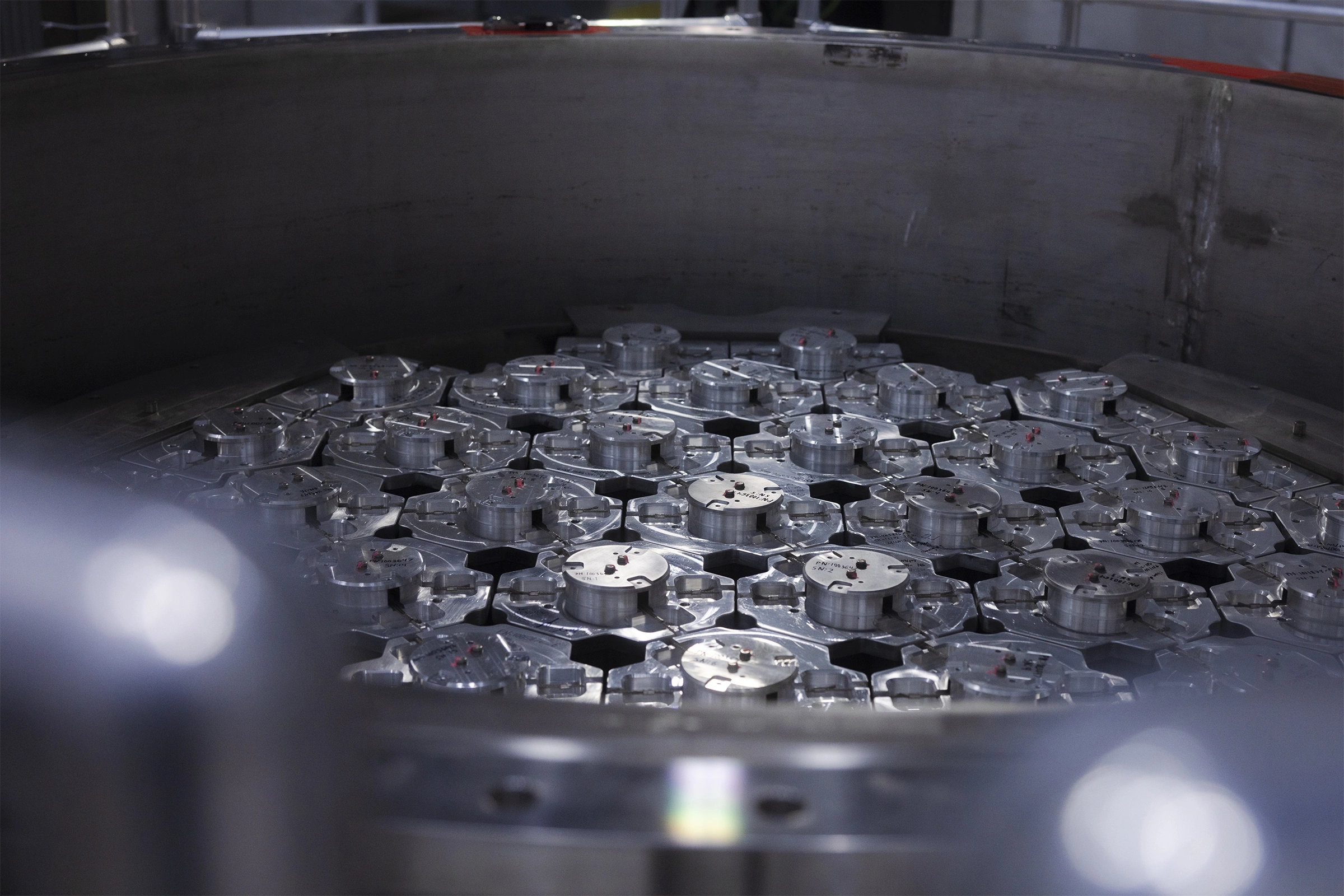
Aalo is building a zero-power criticality reactor, internally named the Critical Test Reactor(CTR), to characterize Aalo-X’s core physics and control behavior in vivo at near-zero power levels.
This approach draws on a rich historical precedent in reactor development. In the early nuclear era, nearly every new reactor concept was first validated on a “critical assembly”, a test reactor that produced a self-sustaining chain reaction, but at low enough power that no significant heat was generated. Without significant heat or coolant, achieving extreme safety is simpler.
From the first Chicago Pile in 1942, to Argonne’s series of Zero Power Reactors (ZPRs) and France’s legendary EOLE/MINERVE/MASURCA facilities, zero-power reactors are an indispensable tool for refining core neutronics. These test beds allow engineers to qualify neutronics codes, measure reactivity margins, and calibrate control systems long before the full-power reactor goes online, all in a safe, flexible experimental environment.
Why do this at zero power? There are advantages of the critical assembly approach:
- Accelerates Process Development: At only watts or kilowatts of fission power, the reactor produces virtually no heat, so no elaborate cooling systems are needed, and there’s no realistic chance of overheating. Without thermal constraints, the facility can be built and licensed extremely fast. This lets us build up internal procedural muscle: Aalo gets to develop, test, and iterate on processes as normal as shipping and receiving and as niche as nuclear fuel handling.
- Enables Rapid Core Physics Testing: The neutron flux in a zero-power test is many orders of magnitude lower than at full power. Components and test instruments incur minimal radioactive activation. That means we can reconfigure the core or perform hands-on adjustments with shorter cooldown times and fewer radiation precautions, accelerating the pace of experimentation. We will run experiments that span seconds, hours, and days at the CTR.
- Allows Broad Experimentation: The CTR will be designed for rapid changes and instrument access. We can insert special neutron detectors, swap out test fuel assemblies, or adjust moderator arrangements between runs. This flexibility allows us to probe “what-if” scenarios and edge cases that a power reactor couldn’t easily accommodate (for example, trying an alternative control rod design or fuel geometry).
- Shortens Learning Cycles: Because of the above factors, we can conduct many critical experiments in succession. A test that might take weeks of preparation and cooldown in a power reactor can be done in days on the CTR. We expect an accelerated learning cycle, where insights from one test can quickly inform the next.
- Reduces Potential Hazards: With only a small fraction of full-power fission source terms, the hazards are greatly reduced. The emergency planning zone is minimal, offsite risk is essentially zero, and the regulatory hurdles are lower. In practical terms, this means fewer bureaucratic delays, and a leaner operations crew focused on science.
In the coming months, Aalo’s CTR will be used to fine-tune and validate the physics of the Aalo-X core. Our reactor engineers will run a battery of experiments to ensure that when Aalo-X proper starts up, its behavior is well-predicted. Some of the key experiments we plan include:
- Reactivity Insertion Tests: We will perform controlled step insertions of reactivity (for example, pulling a control rod by small increments) to observe the reactor’s prompt response and validate our kinetic models and safety margins for transients.
- Axial Flux Profiling: Using movable neutron detectors and flux wires, we’ll map the neutron flux distribution along the height of the core. This axial shape measurement verifies that our core design produces the expected power profile and helps calibrate in-core instrumentation for power level monitoring.
- Control Rod Calibration: Every control rod’s worth (the amount of reactivity it can add or remove) will be measured precisely by sequential insertion and withdrawal experiments. This ensures our rod bank calibrations and shutdown margin predictions are spot on. We’ll know exactly how much reactivity each rod contributes, vital data for both safety analyses and operational maneuvering.
- Shim & Safety Margin Tests: We’ll test various rod configurations, for instance, inserting all “shim” rods (coarse control rods) to gauge the shutdown margin under different conditions. These tests confirm that even with conservative assumptions, the reactor has ample negative reactivity to shut down reliably in any situation. We’ll also simulate abnormal conditions in the physics realm (like a misplaced fuel assembly or a temperature shift in a test section) to see how the core’s reactivity responds, building extra confidence in the inherent safety of the design.
Crucially, all these experiments will happen before Aalo-X operates at significant power. By characterizing the core at zero-power, we will enter the power startup phase with a well-calibrated system. It’s a case of “measure twice, cut once” applied to reactor physics.
The data from the CTR will not only support safe operation; it will also improve our design codes for future cores and feed into licensing the next iterations of Aalo’s reactors.
Considering that most of the old zero-power facilities have been retired, Aalo’s ability to conduct in-house critical physics tests is a strategic advantage that puts us years ahead in understanding our reactor.
Rising to the Independence Day Challenge
Why the rush for July 4, 2026? This date wasn’t chosen at random, it comes from Executive Order 14301, a recent directive from President Trump to spur nuclear innovation. EO 14301 challenged the Department of Energy to authorize at least three new test reactors (outside the national labs) and have each achieve criticality by July 4, 2026. In effect, the U.S. government threw down the gauntlet: to demonstrate a new generation of reactors in record time, reigniting the pace of nuclear energy development.
When this goal was announced, most of the industry deemed it unrealistic. After all, conventional wisdom says that designing, building, and starting up a reactor is a decade-long endeavor at best. License approvals alone can stretch for years. Hitting criticality by mid-2026 meant compressing timelines that historically have been measured in political terms (or PhD thesis durations) down to essentially 12 months of execution. Many commentators openly doubted that even one reactor could make it, let alone three, given the careful, conservative culture that pervades nuclear projects.
At Aalo, however, we saw this challenge as a call to arms and an opportunity to do things differently. We embraced the Independence Day deadline as a forcing function to innovate and iterate faster. By signing up for DOE’s Test Reactor Pilot Program under EO 14301, we gained a pathway to build our reactor under DOE oversight (at the Idaho National Lab site) with an expedited authorization process. But we knew that to succeed where others might falter, we had to push beyond business-as-usual on every front: technical, regulatory, and organizational.
Our decision to go for July 4 criticality wasn’t just about meeting a government milestone; it was about proving nuclear can move at the speed of physics.
We recognized that meeting an aggressive schedule would require owning the critical paths and eliminating the traditional hand-offs and delays. In short, we chose to accept the impossible timeline so that we could reinvent how a reactor project is executed, leveraging our startup agility. While others hesitated, Aalo committed to learning faster and working smarter, convinced that speed itself can be an advantage in uncovering issues early and driving creative solutions. Now, at the halfway mark to the deadline, that contrarian bet is paying off.
Aalo-X is on track to be one of the reactors that delivers on the promise of EO 14301, and perhaps the one that does so with the most comprehensive demonstration of capabilities.
Owning the Full Technical Stack
Aalo’s ability to move at breakneck speed is no accident. We intentionally structured our company to own the full technical stack of reactor development and deployment, end-to-end. Instead of relying on existing facilities and equipment, or outside vendors or siloed contractors for critical pieces, we built up internal capability (and close partnerships where needed) to do everything under one roof. This vertical integration has been a game-changer for schedule and innovation. Here’s what it entails and it’s hell of a lift:
- In-House Reactor Design: All core and system design work for Aalo-X is done by our interdisciplinary engineering team. We leverage decades of proven sodium reactor experiences (EBR-II, SRE, HALLAM, etc.), but all the integration and innovation, from the hybrid loop/pool configuration to the passive safety features, are developed and tested by Aalo. No waiting on an external architect-engineer; our designers sit next to our analysts, who sit next to our fabricators.
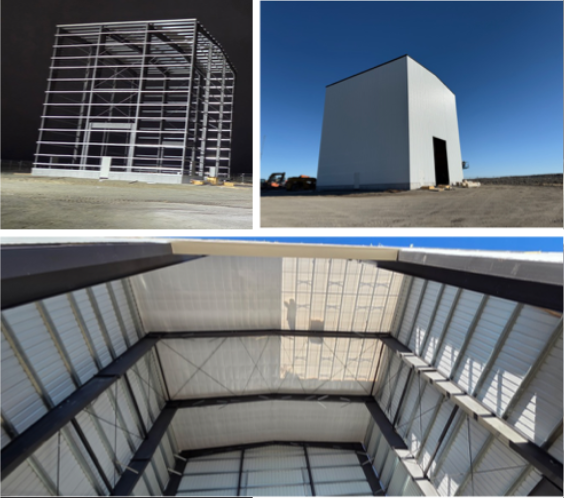
- In-House Facility Design: Building the reactor is half the problem, the other half is the facility that houses it. While others chose to operate in existing DOE facilities, Aalo decided to build our own. While our team strives to meet the July 4th timeline, they are inherently getting exposed to technologies that can break the traditional barriers of slow and bespoke construction seen in past nuclear power plants.
- In-House Module Fabrication: We built our own manufacturing facility in Austin and are using it to fabricate reactor modules and assemblies in-house. By controlling manufacturing, we iterate on design details rapidly and ensure quality. When something doesn’t fit just right in the prototype, we fix it immediately on the shop floor. This also means we avoid long lead times. Our team procures raw materials and turns them into finished components on an aggressive timeline.
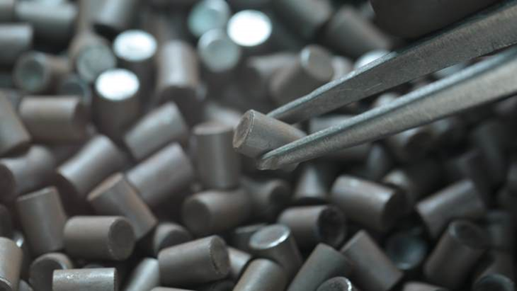
- Commercial Fuel Supply and Fabrication: Rather than wait in queue for someone else’s fuel, or one-off handout from DOE for the first reactor, Aalo took charge of the fuel cycle for Aalo-X. We secured low-enriched uranium feedstock early (fresh enriched UF₆ from Urenco) and arranged for it to be converted into UO₂ fuel pellets and assembled into fuel rods through a partnership with one of the world's most experienced fuel fabricators, with delivery slated in time for startup. Our team is deeply involved in the fuel design and quality oversight, effectively integrating us as partners in fuel logistics even as we leverage an experienced fabricator. This ensures our fuel will be ready on time and meet our specifications for performance. This work is foundational for us to scale to 100+ reactors.
- In-House Reactivity Control Systems: Aalo is developing its reactivity control and protection systems to be tailor-made for Aalo-X’s operation. We aren’t simply buying an off-the-shelf reactor I&C system; we’re crafting a modern digital control platform with distributed sensors and a robust reactor protection system that fits our reactor’s specific dynamics. By writing our own control software and integrating it with proven industrial hardware, we can implement the automation and safety logic we want, and we have total understanding of the system’s behavior. This level of control design in-house also speeds up commissioning, our engineers know every line of code and every circuit.
- In-House Operator Training: We knew that a fast timeline would mean no time to wait for outside operators to get up to speed. So Aalo has been training its own operations crew from the get-go, a team of ex-navy nuclear submarine reactor operators and test engineers are getting trained to be intimately familiar with Aalo-X’s design and eccentricities. They have been running our prototypes and participating in simulations and drills. By the time fuel is loaded, our operators will essentially have lived and breathed this reactor for months. Moreover, we are preparing the necessary documentation and safety analyses internally so that our team can operate both the CTR and the Aalo-X reactor under DOE authorization. Owning the operations and training aspect minimizes the friction at startup and aligns the team on a singular mission.
- Critical Experiment Capability: As described, we even went so far as to build our own zero-power testing reactor. It’s virtually unheard of in modern times, for a private company to design, build and operate a reactor today, but Aalo’s view is that if it’s important for success, we will do it ourselves. By operating the CTR in-house, we gain first-hand data and hands-on experience that feeds directly into Aalo-X’s startup. We’re not outsourcing our learning to a national lab; we’re internalizing it. The result is a tightly looped feedback cycle between experiment and design.
This do-it-all approach requires significant investment in people, facilities, and R&D, but it yields an undeniable execution edge. We don’t get stuck in contractual limbo or wait for another organization’s timeline. The Aalo team can integrate changes quickly, solve problems on the spot, and maintain a unified vision from design through operation. It also means that when Aalo-X achieves its objectives, Aalo as a company retains all the experience, know-how and IP gained along the way.
For a fast follow in commercial deployment, that knowledge is gold.
A New Chapter for Nuclear
In the coming weeks, as we build the reactor, load fuel and approach initial criticality, there will be more updates and likely a few nail-biting moments, as is the nature of any bold endeavor. Yet our confidence in Aalo-X’s success is grounded in the preparation and hard data we’ve accumulated. Our team built this reactor one step at a time, learning and adapting at each step, and now we stand ready to light it up on our terms.
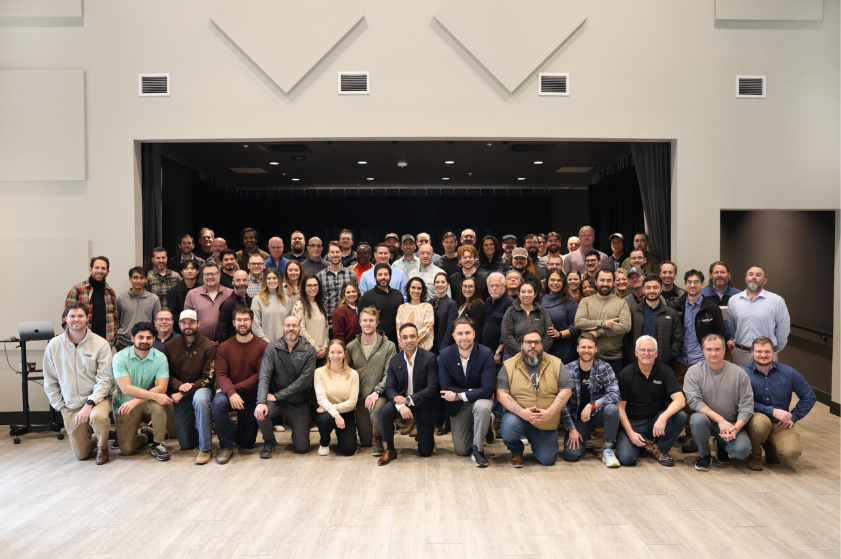
Come July 4, 2026, during America’s 250 years of existence, when Aalo-X achieves criticality, it will symbolize something powerful: that the spirit of innovation and the drive to break constraints are alive and well in nuclear energy. We’re incredibly excited for what this means not only for Aalo but for the industry as a whole. It’s an invitation to think bigger and move faster in deploying the reactors of tomorrow.
Stay tuned for more as Aalo makes its final preparations for criticality. We’ll be sharing behind-the-scenes looks as we count down to Independence Day. To all the engineers, officials, investors, and supporters following our journey—thank you.
Many people think building and operating an advanced reactor this quickly is impossible. To Aalo, it is only impossible until it is inevitable.
.avif)